The Visitor Tools That Log What Someone Did Before You Ever See Their Name
Behavioral session data, not a name, is what gives sales a reason to reach out.
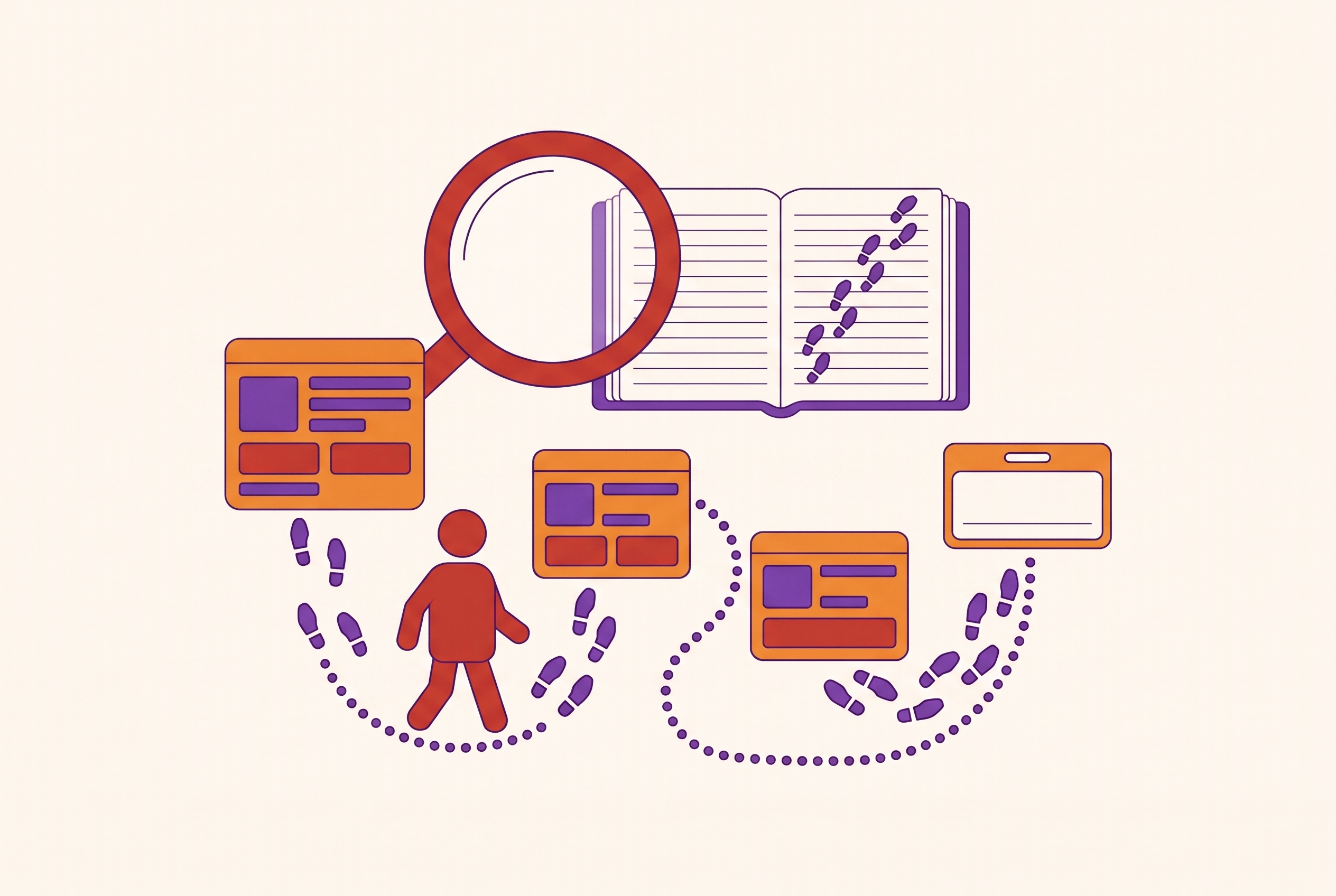
For buyers seeking an RB2B alternative with more data than a LinkedIn profile, the decisive criterion is the behavioral record delivered with each identity. A timestamped history of pages, scroll depth, clicks, exits, and traffic sources gives sales a basis for outreach that a contact record alone cannot provide.
Why the name that arrives in your CRM is the least useful moment in a visitor's session
Teams often treat a resolved name, company, and email as the product they are buying. Yet the name arrives after the activity that makes the contact matter to sales, sometimes after the session has ended. The visitor has already made choices. They read pricing or skipped it, reached the bottom of a case study or left at the headline, and explored a competitor comparison or ignored it.
A rep receiving only a name and email knows that someone visited, but has no sound basis for choosing a timely, relevant opening. The name does not explain the visit. The prior behavioral log shows what held the visitor’s attention and where that attention stopped, without claiming to know what the person actually thought.
How the behavioral log forms before any identity resolves
A tracking script begins recording activity when a visitor lands, before the system knows who that visitor is. The events can include page views, scroll depth, clicks, video plays, exit intent, and form interactions. Identity is not required for this recording. Until a match occurs, the events belong to a session ID.
The session ID anchors the sequence of activity. It connects the entry page and traffic source with the pages that follow, the time spent on each, the depth reached, and the signals associated with departure. Order gives those observations their meaning. Someone who visits pricing after a competitor comparison takes a different path from someone who visits pricing and then leaves at once, even though both records include the same high-value page.
Identity resolution occurs later, when the tool matches a persistent identifier, such as a hashed email, device fingerprint, or identity graph signal, to a known record. The tool then attaches the identity to the prior session. The recording does not begin at that point. Instead, the match makes an existing anonymous history attributable to a person. If the delivered record contains only a name and one page-view ping, that history has not reached the rep, even if it exists within the system.
Why an RB2B alternative needs to surface the session, not just a name
RB2B’s own site describes its offering as “Identify your anonymous website visitors. Push their LinkedIn profiles to Slack in real-time” and specifies “US Visitors Only”. Its pixel-to-Slack model is a lightweight way to handle person-level visitor identification. The delivery format is deliberately direct. A match becomes an alert, and a person decides what happens next. Accompanying information can include pages visited and time on site, so the distinction is not simply between tools with context and tools without any.
The more useful distinction is between a notification and a usable session record. A LinkedIn profile with some visit information can draw attention to a prospect without explaining the prospect’s path through the site. Depth and sequence can remain unresolved. The rep still needs to know whether the visitor read the comparison before pricing, reached the relevant CTA, or showed exit intent after encountering a high-value page.
This gap concerns delivery as well as capture. Because anonymous events can accumulate before resolution, identifying the visitor need not be the point where the product’s contribution stops. Company-only identification creates a related constraint. A company name gives sales an account to consider, but does not itself supply an individual contact or behavioral context. For buyers comparing alternatives, the relevant question is therefore what evidence accompanies the identity.
What a full event journey actually contains and why each signal type matters differently
A complete event journey includes timestamped page views with dwell time, scroll depth per page, and clicks on links, CTAs, and navigation. It also records video plays and completion rates, exit-intent signals such as cursor movement and tab switching, and form interactions that show which fields were touched and which were submitted. Traffic source completes the entry context. These are not interchangeable measures of engagement, because each describes a different part of the visitor’s activity.
Page views establish which subjects attracted attention, while dwell time and scroll depth help distinguish arrival from sustained reading. A pricing-page view with high scroll depth and a return visit is a strong purchase-consideration signal. A view alone is less informative. Likewise, a case-study visit followed by an exit before the CTA supports a reading of interest with an unresolved objection and an incomplete move toward contact. The record gives some grounds for that reading, but it cannot prove why the visitor acted that way.
Clicks and form activity show where attention became action. A visitor who touched form fields without submitting showed intent that was cut short, which differs from showing no intent at all. That distinction changes the sales interpretation. Exit intent on pricing similarly points toward possible price or commitment friction, while the visitor remains a potential prospect. Video completion shows whether the visitor stayed through the content after starting playback.
The sequence then connects these signals into a journey. A competitor comparison before pricing suggests someone is weighing a choice and has moved beyond early research. Return cadence adds a further dimension. Someone who reads a case study, visits pricing, and returns three days later to read a second case study presents a different pattern from someone who bounces from the homepage. Flattening both into a visit count removes the progression that makes the first record useful.
The rep needs to see the evidence behind the interpretation, including the page, the action, and its position in the journey. Signals should remain open to examination. A record that preserves them allows sales to distinguish an interrupted form from a shallow visit, rather than treating both as visitors who failed to convert.
How the ad source attached to a session changes what a rep should say and do
Traffic source establishes the context in which the visitor began reading. Someone who arrives through a LinkedIn ad aimed at a specific job title has a different starting point from someone who finds an organic blog post. The opening move should reflect that difference. The ad source connects subsequent behavior to the message that brought the visitor to the site, rather than leaving the rep to interpret the session in isolation.
To apply that distinction, a rep should use the originating campaign as context for the conversation, then use the page sequence to understand where the visitor went next. An ad click alone does not show that someone is ready to buy. If the visitor proceeded to a comparison page and then pricing, that later behavior adds evidence of evaluation. If the record contains only the originating platform, the rep lacks the specific campaign or ad context needed for a more precise opening.
When a session includes Google, Meta, or LinkedIn as the ad platform, together with the specific campaign or ad, an identity match also becomes an attribution event. The spend acquires an identifiable buyer connection. Without that link, reporting can credit clicks and impressions while failing to connect them to the companies and individuals influenced by the campaign.
Why AI agents and crawlers must be separated from the human session log before any of this is useful
A detailed log is only useful for sales if its events describe the right kind of visitor. AI agents and bots can inflate session counts and distort the patterns used to interpret human interest. A crawler that reads content shows no sign of weighing a purchase, even when it visits pages that would matter in a human session.
The same distinction applies to identification claims. A session resolved to a “visitor” that is actually a crawler is not a lead and should not count as a human match. Separation must precede the reported sales interpretation. Otherwise, a match rate can overstate what the tool identifies, while the behavioral record mixes machine consumption with human choices. Detailed timestamps cannot repair that category error.
However, removing AI activity from the human log does not make it worthless. The questions are different in this case. Knowing which content ChatGPT, Claude, or a third-party crawler consumed, how deeply it scraped, and who operates it can inform a company’s understanding of how AI systems represent its product to buyers. That evidence belongs in a separate view, where it can be interpreted without being mistaken for a prospect’s journey.
Human behavior supports an assessment of potential buying activity, while agent behavior supports an assessment of machine access to product information. Neither benefits from a combined count. Keeping those records distinct protects the sales log and preserves the opportunity to learn from AI traffic on its own terms.
What to look for in the behavioral record a tool actually delivers when a name resolves
The practical evaluation should begin with the question “what does the record look like when a match fires?” rather than “what is your match rate?” The first reveals what a rep receives and can use. A name with one page-view ping and a name with a full timestamped session are categorically different deliverables. Comparing them only through identification rates conceals the difference in the work left to sales.
The first check is continuity of the behavioral record. It should show the complete page-view sequence with dwell time, scroll depth, clicks, exit-intent events, and form interactions, including abandoned fields. The prior session must remain visible. Visit count and return cadence should then show how the current session fits with the visitor’s other visits, so the rep can see beyond a single alert.
The next check is whether the record connects behavior to acquisition and sales context. It should include the originating traffic source and ad platform, with the campaign or ad where available, and CRM status. Existing pipeline context changes the next action. A rep needs to know whether the identified person is already in the pipeline before treating the event as a new outreach opportunity.
The final checks concern the identity and the integrity of the count. Person-level and company-level matches should be reported separately, because a blended identification rate can conceal a much smaller share of named individuals. Human and automated sessions also need separation. For an RB2B alternative, the evaluation is complete only when the delivered record exposes the prior journey, its source, its return pattern, its CRM context, and the kind of identity attached to it. The purchasing decision then rests on evidence a rep can act on.
Every new piece from Opt Out Report, as it's published.
Follow